
Some tastings are enjoyable. Others become educational benchmarks. This Rhône-themed lineup managed to be both.
The evening moved from Northern Rhône whites into Southern Rhône reds, finishing with mature Cornas. Along the way, we had side-by-side varietal comparisons, a wildcard bottle outside the region, low-intervention winemaking, and two mature reds that showed why patience matters.
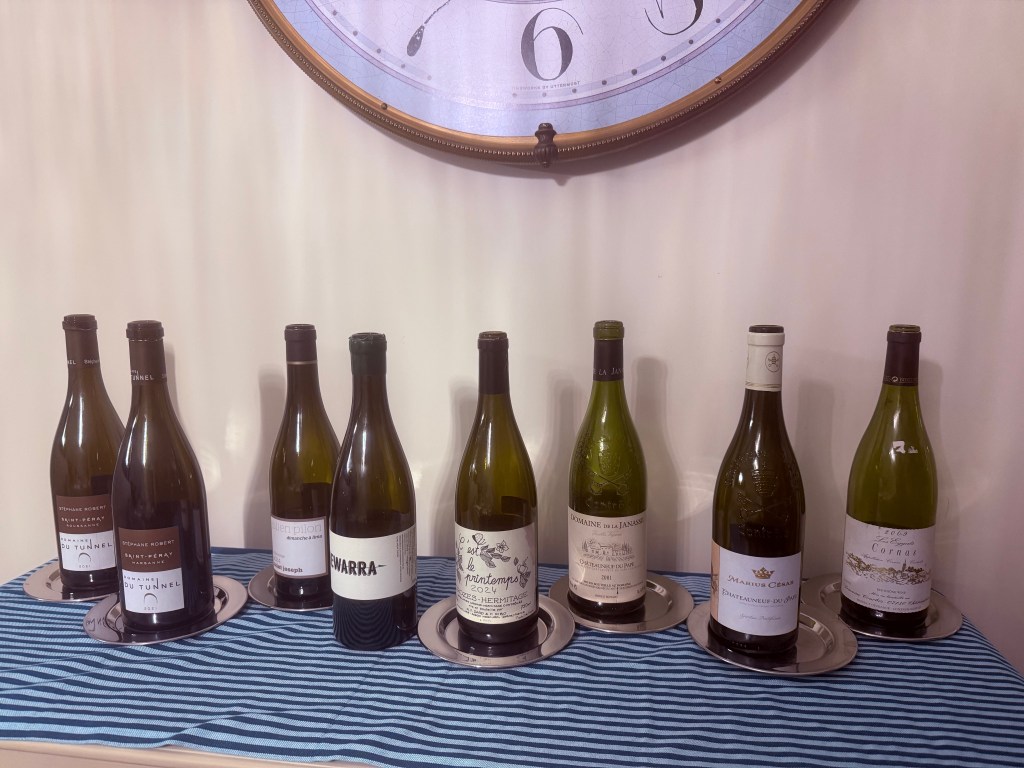
Opening Flight: Same Producer, Same Vintage, Different Grapes:
NO.1-2 Domaine du Tunnel – Stéphane Robert, Saint-Péray 2021
Marsanne vs Roussanne
A perfect way to begin the night: two wines from the same producer, same appellation, same vintage but each made from a different grape.
This stripped away variables and allowed the varieties themselves to speak.
Marsanne
More savory and restrained in profile.
- Aromas of earth, fresh-cut grass, and herbs
- Oily, rounded texture
- Subtle fruit expression
- Calm, textured, serious style
Marsanne here felt grounded and tactile. Less about perfume, more about shape and texture.
Roussanne
Immediately more expressive and lifted.
- Floral aromatics
- Tropical fruit tones
- Lemon drop character
- Fuller body with higher perceived acidity
Roussanne carried more brightness and charm while still showing substance.
Key Takeaway
Even under identical producer and vintage conditions, the grapes showed clear contrast:
- Marsanne: savory, textural, structured
- Roussanne: aromatic, vibrant, energetic
A textbook comparison and one of the most educational flights of the night.
Wild Card Break:
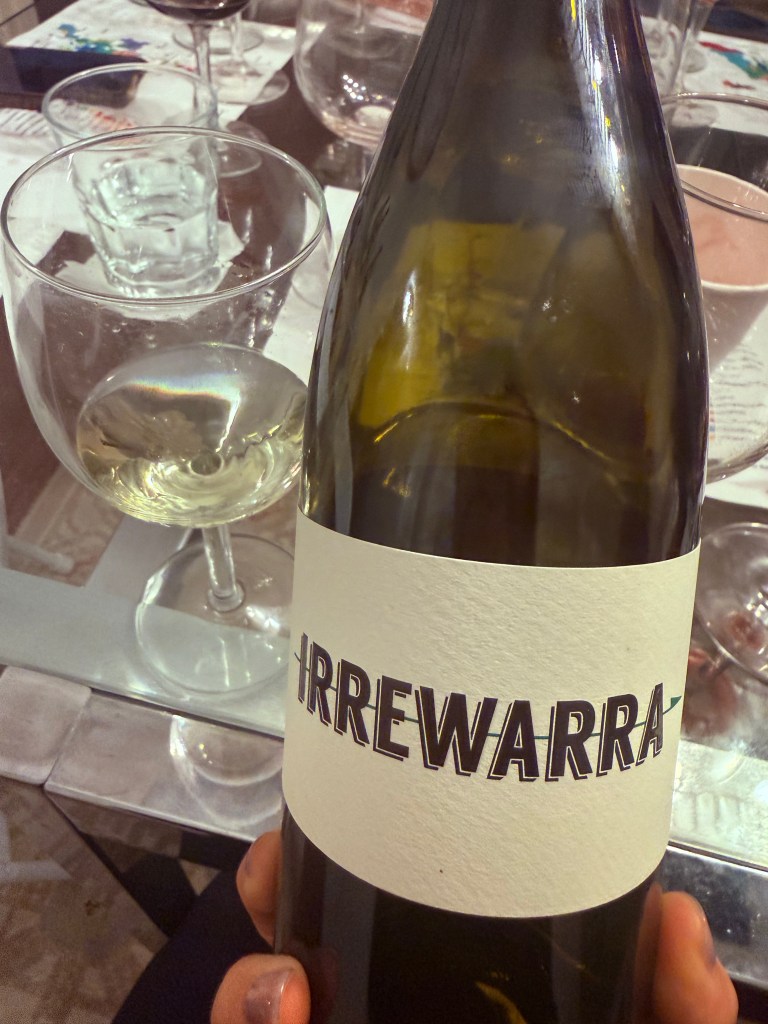
NO.3 Irrewarra Chardonnay (Australia) 2021
Every serious tasting benefits from a mental reset.
Inserted mid-lineup, the Australian Chardonnay was not Rhône, not Rhône grape varieties, and not stylistically aligned with the surrounding wines. That made it useful.
Sometimes stepping outside the theme helps recalibrate the palate and prevents pattern tasting.
A smart wildcard.
The Blend Changes Everything
NO. 4 Julien Pilon Saint-Joseph Blanc “Dimanche à Lima” 2024
After tasting the single-varietal Marsanne and Roussanne earlier, the next Rhône blend showed an entirely different personality.
Rather than highlighting one grape, it expressed composition and harmony.
Aromatics
- Honeysuckle
- Apple cider
- Ginger candy
- Pineapple
- Quince
Palate
- Rounder and fuller-bodied
- Medium acidity
- Gentle orange-pith bitterness on the finish
Low-Intervention Energy
NO. 5 Crozes-Hermitage “C’est le Printemps” 2024
A biodynamic, low-intervention bottle using carbonic maceration.
At first it felt tight and closed, full of horse sweat. With air, it opened steadily and became increasingly charming.
- Fresh, energetic style
- Easy to drink
- More expressive over time
- A wine that rewarded patience in the glass
Not every wine needs to shout immediately.
Mature Southern Rhône at Its Best
NO. 6 2001 Domaine de la Janasse Châteauneuf-du-Pape Vieilles Vignes
One of the highlights of the evening, generously brought by Petri.
This bottle showed exactly why mature Châteauneuf-du-Pape can be so compelling.
Young examples often emphasize ripe fruit, density, and alcohol. With age, the best examples exchange volume for something more valuable: harmony.
Appearance
- Medium garnet
Aromatics
- Black cherry
- Blood orange
- Leather
- Dried rose
- Cherry cola
- Classic garrigue
Palate
- Fully integrated
- Complex and layered
- Medium tannin
- Vibrant acidity
- Long finish
The old-vine depth was clear, but what stood out most was composure. After roughly 25 years, the wine had become complete rather than diminished.
Powerful wines can age. Great wines evolve.
Outstanding bottle.
Younger Contrast:
NO. 7 2019 Marius César Châteauneuf-du-Pape
Placed next to the 2001 Janasse, this served as an excellent contrast.
Where the older wine emphasized integration and nuance, the younger vintage naturally leaned toward fruit, primary energy, and youthful structure.
A reminder that the same appellation can offer completely different pleasures depending on age.
Grand Finale: Mature Northern Rhône
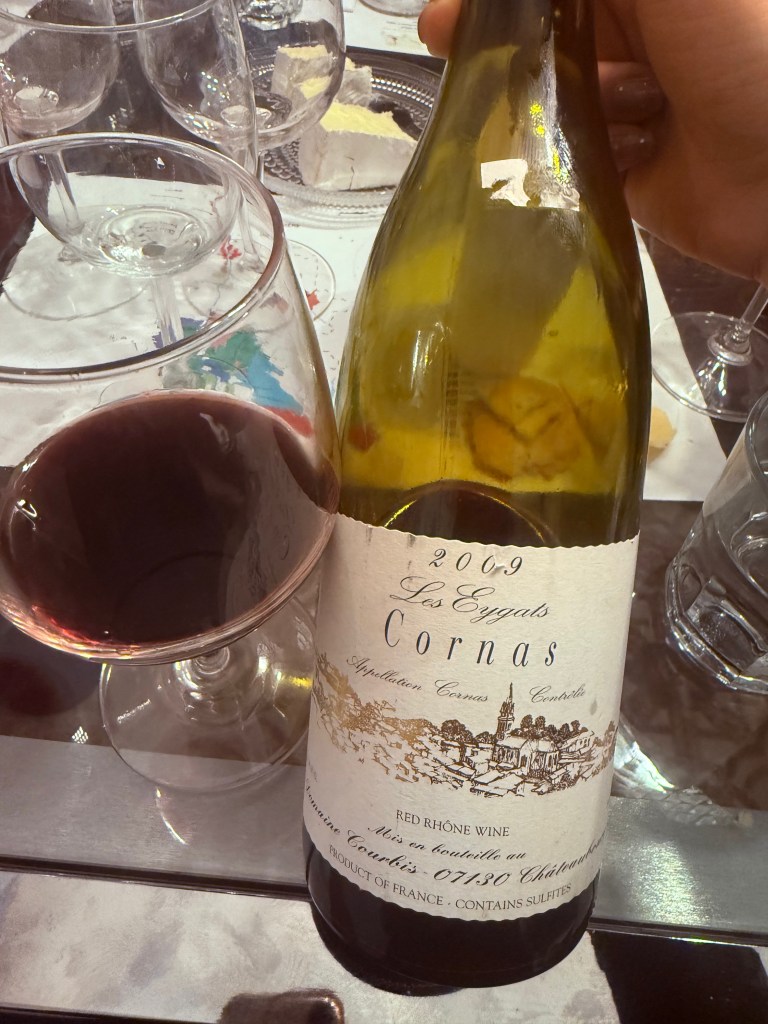
NO. 8 2009 Domaine Courbis Cornas “Les Eygats”
A dramatic finish.
What immediately stood out was the color: deep, hazy purple — almost shocking for a wine of this age. Nearing two decades old, it still showed more purple than ruby.
Aromatics
The nose revealed Northern Rhône quickly:
- Black pepper
- Black cherry
- Blueberry
- Dust
- Volcanic mineral edge
Classic Syrah markers with no confusion about origin.
Palate
The wine had clearly entered secondary and tertiary development while retaining freshness and drive.
That combination — maturity without fatigue — is exactly why great Syrah is so revered.
A beautiful bottle and a strong case for aged Cornas.
Final Thoughts
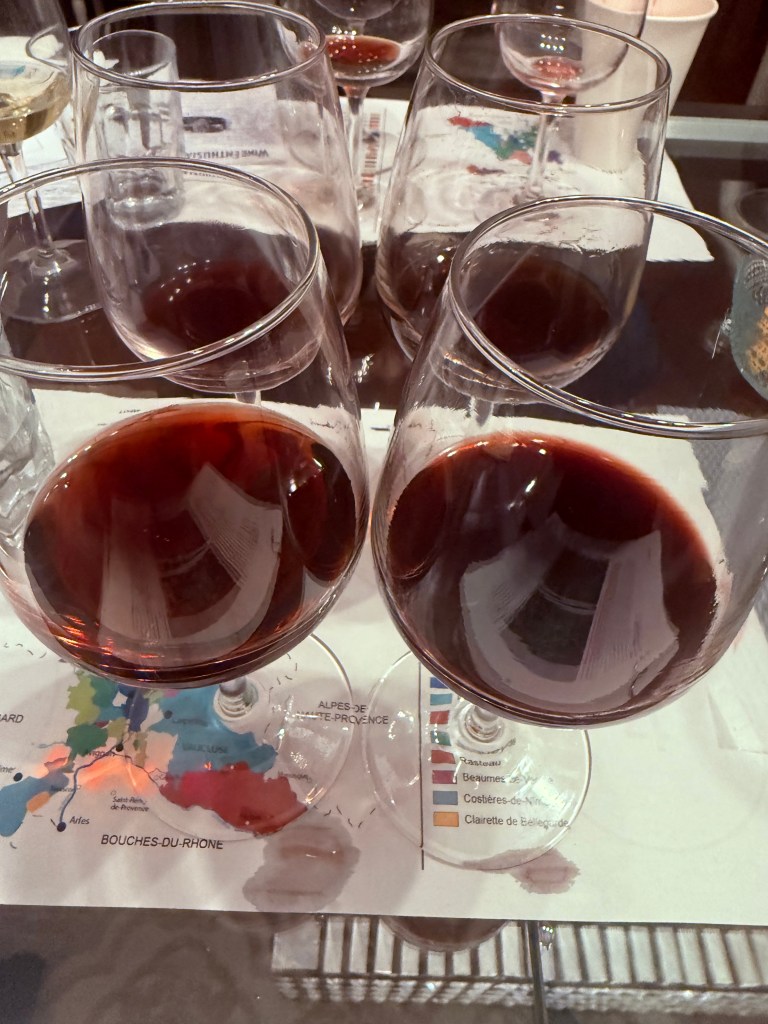
This tasting succeeded because it offered more than quality bottles. It created contrast:
- Marsanne vs Roussanne
- Single variety vs blend
- Rhône vs wildcard Chardonnay
- Young vs mature Châteauneuf-du-Pape
- Southern Rhône generosity vs Northern Rhône structure
The best tastings are not always the most expensive. They are the ones that teach.
This one did exactly that.


Leave a Reply